
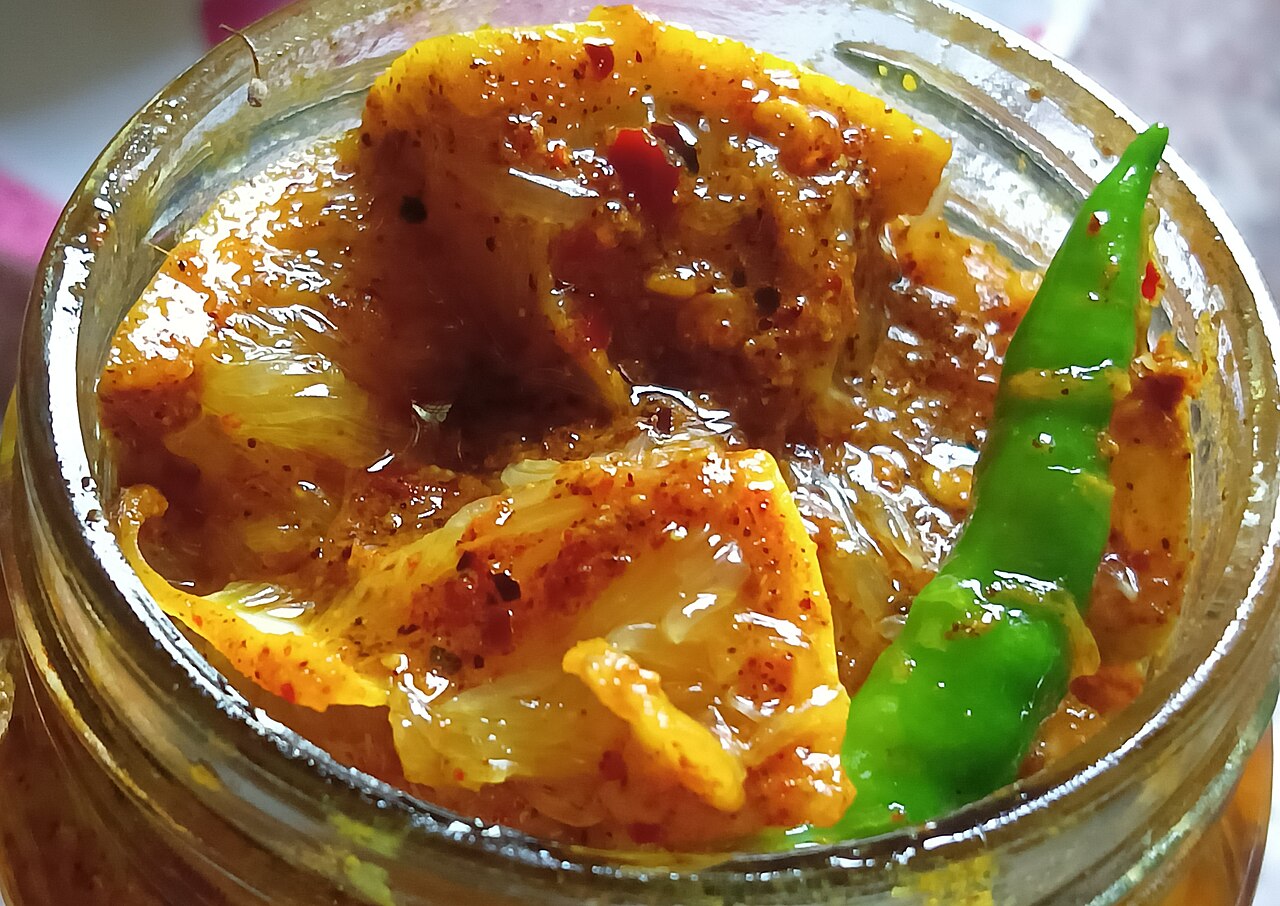
An Assamese pickle, or achar (আচাৰ), is a fruit, vegetable, bamboo shoot or chilli preserved in mustard oil with salt and whole spices, sometimes sweetened with jaggery. The best-known are khorisa (fermented bamboo shoot), bogori (Indian jujube), jolphai (Indian olive), ou tenga (elephant apple), mango and bhoot jolokia. They share the plate with pitika and tenga, two Assamese favourites that are not pickles at all.
Outside the Northeast, “achar” usually brings mango or lime to mind. In Assam, the jar may just as well hold a sour forest fruit or fermented bamboo shoot. This guide covers the main Assamese pickles, their local names, what each tastes like, and how to tell an achar from a pitika or a tenga.
Quick facts: Assamese pickle
- Assamese name: achar (আচাৰ), also written aachar or asar [4].
- Usual base: mustard oil, salt and spices such as cumin, coriander, fennel, fenugreek and mustard seed; jaggery in sweet versions [4].
- Common fruits: bogori, jolphai, ou tenga, omora (hog plum), kothal (jackfruit), mango and lemon [4].
- Fermented relatives: khorisa (bamboo shoot) and kharoli (fermented mustard) [6][7].
- Signature chilli: bhoot jolokia, measured at more than 1 million Scoville heat units in 2007 [8].
- Not pickles: pitika (a fresh mash) and tenga (a sour dish) [1][2].
What makes Assamese pickle different from other Indian pickles?
Two things set it apart: mustard oil as the base, and fruits that grow wild or in home gardens across the Northeast. Mustard oil is the preferred cooking oil in Assam [1], and it carries into the pickle jar.
Food writer Reema Gowalla notes that Assamese pickles draw on one shared set of spices, with sweet versions adding jaggery and paanch phoron (a five-seed mix) [4]. The fruits are the real difference. Jolphai, for example, comes mostly from home gardens and wild trees, with no commercial orchards reported [10].
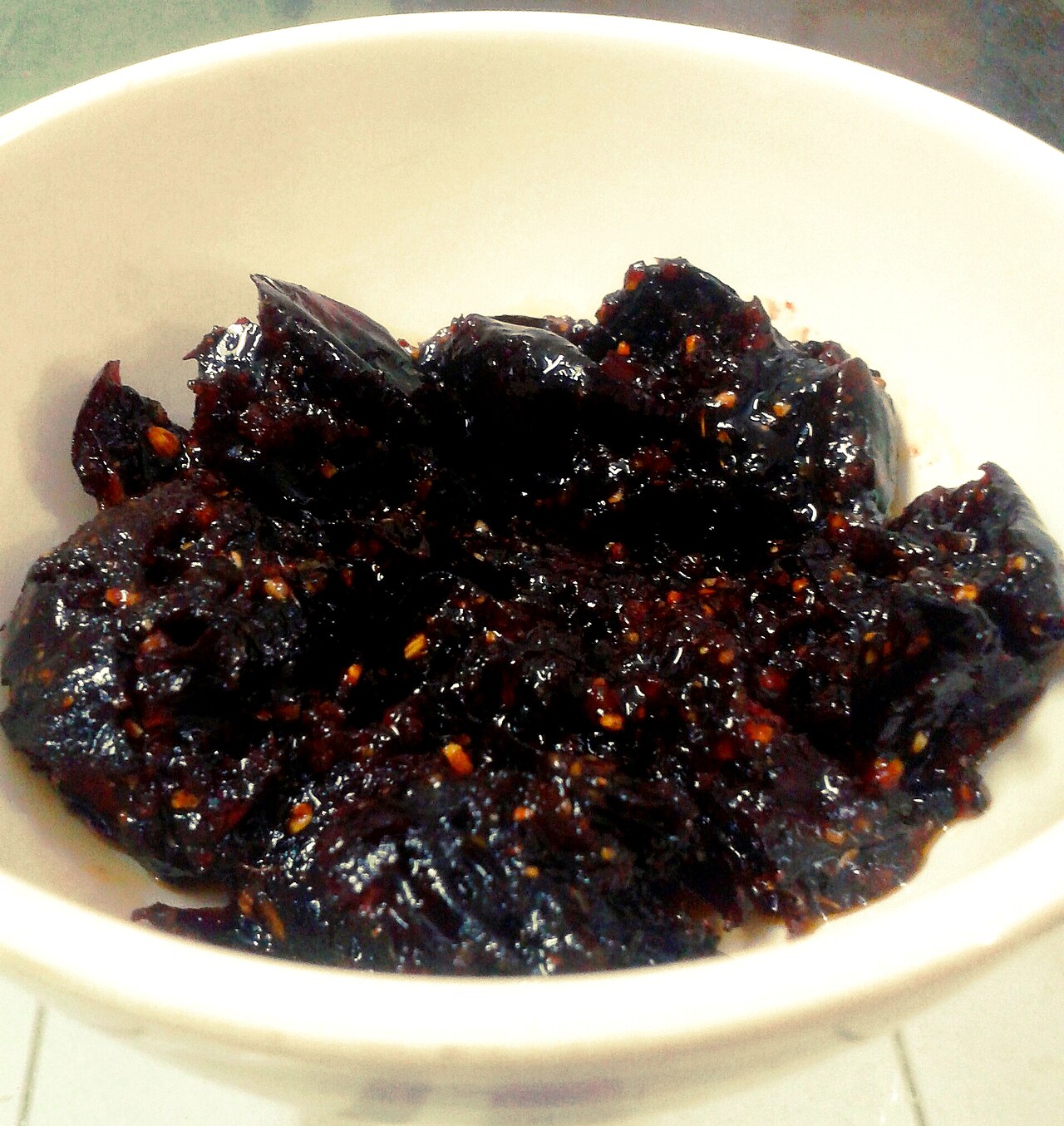
Sun matters too. In winter, bogori is spread on bamboo trays to dry in courtyards and on roofs, and the dried fruit is ground into a powder called bogori guri [5].
What are the main types of Assamese pickle?
The main types are khorisa, bogori, jolphai, ou tenga, omora, kothal, mango, lemon and bhoot jolokia, plus the fermented mustard paste kharoli. Here is what each one is.
- Khorisa (fermented bamboo shoot): young bamboo shoot fermented until sour. It goes into meat and fish dishes and into pickles [7]. Read more in our guide to khorisa, Assam’s bamboo shoot pickle.
- Bogori (Indian jujube, ber): made savoury with spices or sweet with jaggery [4]. Ripe bogori also goes into dal and masor tenga [5].
- Jolphai (Indian olive): the sour, astringent fruit of an Elaeocarpus tree, not related to the Mediterranean olive. It is picked roughly from August to November [9][10]. See why jolphai isn’t really an olive.
- Ou tenga (elephant apple, Dillenia indica): a large green fruit with sour, astringent pulp [11][13], pickled in a sweet-and-spicy style with jaggery [4].
- Omora (hog plum) and kothal (jackfruit): tangy pickles made with the same family of seeds and spices [4].
- Aam (mango) and nemu (lemon): familiar across India, made in Assam with mustard oil.
- Bhoot jolokia (ghost pepper): in 2007, New Mexico State University measured it at more than 1,000,000 Scoville heat units, then the hottest chilli on record [8]. Our bhoot jolokia guide explains how to eat it.
- Kharoli (fermented mustard): mustard seeds pounded with oil, khar (banana-ash water) and salt, wrapped in banana leaves and fermented in bamboo tubes over a fire for about 5–11 days. A 2022 study says most communities in Assam eat it as a condiment [6].
Achar, pitika or tenga: what is the difference?
Achar is preserved and keeps for weeks; pitika is a fresh mash made for one meal; tenga is a sour dish, most often a light fish curry. All three can appear on the same plate.
Pitika is mashed food seasoned with raw mustard oil and onion [3]. The best known is aloo pitika, mashed potato with onion, green chilli and mustard oil, which Assam Tourism describes as a favourite comfort food [1][2]. Pitika can also be made from roasted aubergine, tomato or khorisa [1].
Tenga means sour. Assam Tourism describes it as an essential part of the meal, and says a traditional meal opens with khar and closes with a tenga curry [2]. Cooks sour it with tomato, kaji nemu (an Assamese lemon), thekera (dried Garcinia), ou tenga or kordoi (star fruit) [1][3].
So the same fruit can play different roles. Ou tenga can sour a fish curry one day and fill a pickle jar the next.
How do Assamese families eat pickle?
A little at a time, with rice. The pickle sits at the side of the plate, next to dal, a vegetable, fish or meat and perhaps a pitika.
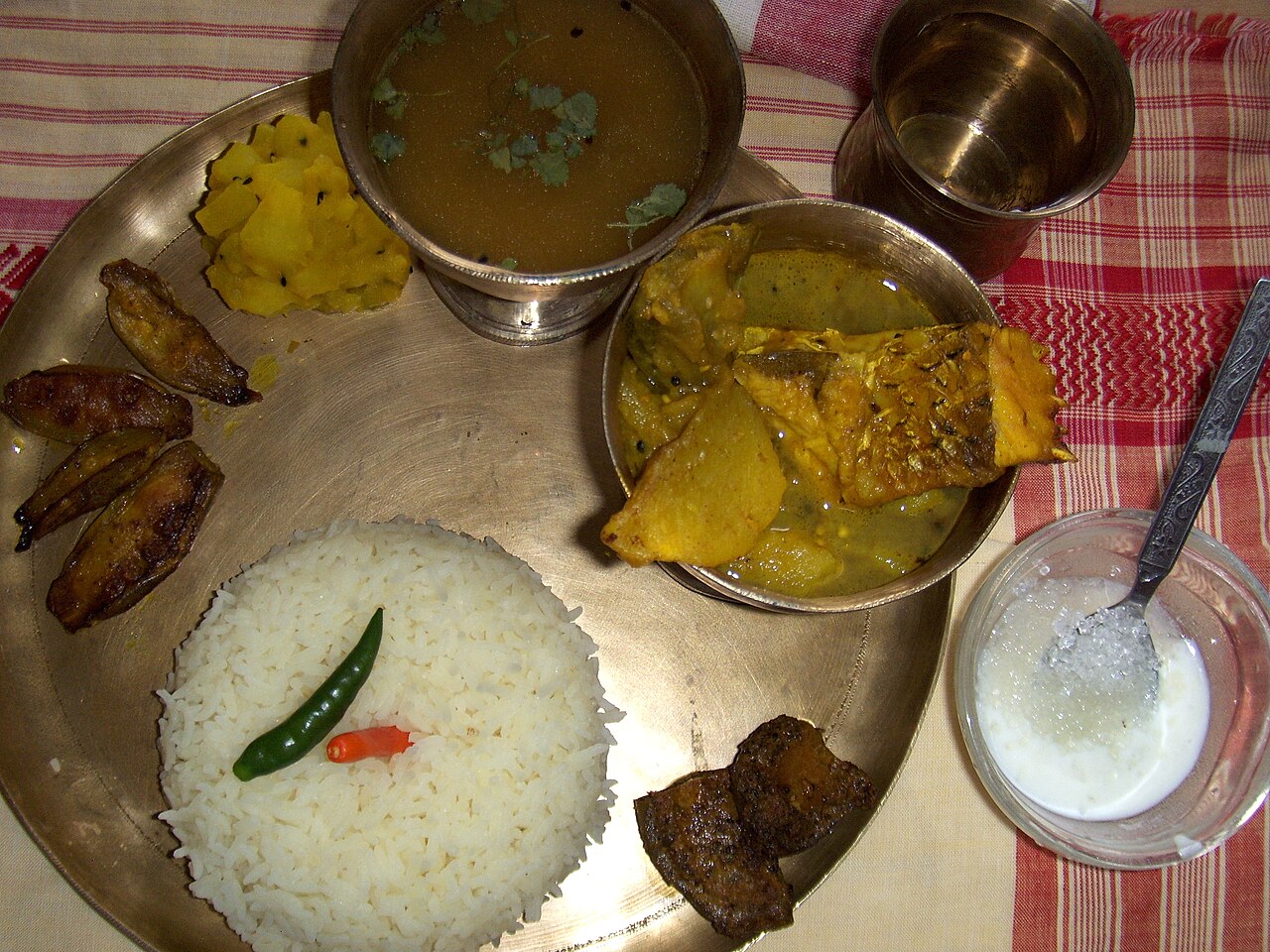
In our own homes, sweet bogori or jolphai is the pickle children reach for, while a chilli pickle is taken by the fingertip. With anything made from bhoot jolokia, start with a very small amount.
Pickle also turns a plain meal into a full one. Even poita bhaat, fermented rice, is eaten with nothing more than raw mustard oil, onion and chilli [1][3]. Once a jar is open, use a clean, dry spoon and follow the storage line on its label.
Who makes Assamese pickles today?
Home kitchens, and small food businesses that grew out of them.
One example: Ilamoni Bora of Morigaon district started making pickles in 2014 with ₹700, after joining a self-help group under the Assam State Rural Livelihood Mission. By 2023 she was drying produce in a solar dryer, employing five women year-round and selling across India [12].
Where can you buy Assamese pickle online?
Look for small-batch makers who name the fruit, the oil and the spices on the label. GHARSA’s six pickles are listed below with their ingredients.
Taste it
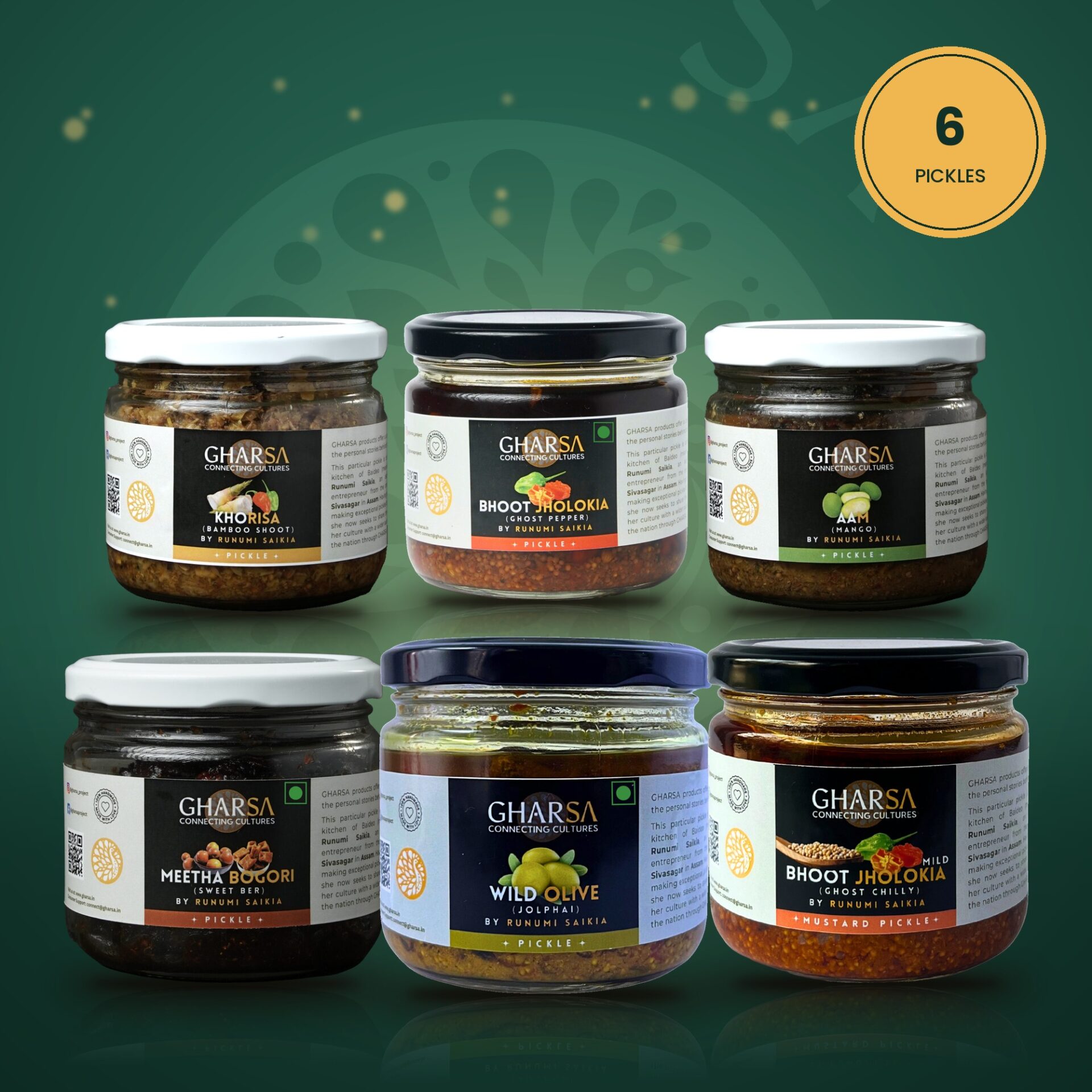
- Khorisa (Bamboo Shoot) Pickle: bamboo shoot, mustard oil and bhoot jholokia with whole spices.
- Meetha Bogori Pickle: bogori with jaggery, black pepper and black salt.
- Jolphai (Indian Olive) Pickle: jolphai in mustard oil with cumin, coriander and mustard seed.
- Aam (Mango) Pickle: mango, mustard oil and green chilli.
- The Original Bhoot Jholokia Pickle, and the Mild Bhoot Jholokia Mustard Paste for those who asked us for a milder version.
Try three in the Taste of Assam box (Khorisa, Meetha Bogori, Jolphai), all six in the Best of Assam Gift Box, or browse all Assamese pickles and gift boxes.
Want us to stock ou tenga, omora or kharoli? Join the list on WhatsApp.
Frequently asked questions
What is pickle called in Assamese?
Pickle is called achar in Assamese (আচাৰ), often spelt aachar, asar or aasar in English. The word covers fruit, vegetable, bamboo shoot and chilli preserves made with mustard oil, salt and spices. Some are sweetened with jaggery. Fresh mashes (pitika) and sour curries (tenga) are separate dishes, not achar.
Which Assamese pickle is the least spicy?
Sweet fruit pickles are usually the gentlest, such as bogori achar made with jaggery. Heat depends on the recipe, so read the ingredients for chilli. GHARSA’s Meetha Bogori lists no chilli at all, while anything made with bhoot jolokia is very hot and best eaten a little at a time.
Is Assamese pickle vegetarian?
The common Assamese pickles are made from fruit, vegetables, bamboo shoot or chilli, cooked with mustard oil, salt and spices, so they are vegetarian. Recipes vary, so check the label when buying from any brand. All six GHARSA pickles list only plant ingredients, oil, salt and spices on their labels.
What is the difference between pitika and pickle?
A pickle (achar) is preserved to keep for weeks or months in oil, salt and spices. Pitika is a fresh mash made for one meal, such as aloo pitika: mashed potato with raw onion, green chilli and mustard oil. Both sit beside rice, but pitika is eaten the same day it is made.
When are Assamese pickles made?
Each pickle follows its fruit’s season. Fresh bamboo shoots are most available from June to October, jolphai is picked roughly from August to November, and bogori is sun-dried on bamboo trays in winter. Mango pickles follow the summer mango crop, so a home pantry fills up gradually over the year.
Image credits
- Featured image, homemade nemu (lemon) achar: Kandarpajit Kallol, CC0, Wikimedia Commons
- Bogori achar: Meghmala Choudhury, CC BY-SA 4.0, Wikimedia Commons
- Assamese meal on a bell-metal plate: Arinditaghosh, CC BY-SA 4.0, Wikimedia Commons
- Best of Assam Gift Box: GHARSA
Sources
- Wikipedia. Assamese cuisine (used as a pointer).
- Assam Tourism, Government of Assam. Cuisines of Assam.
- Monali Kakoty, EastMojo (22 August 2025). Preserving Assam’s culinary heritage: a legacy of timeless flavours.
- Reema Gowalla, Slurrp (updated 6 December 2022). Forget Bamboo Shoot: Indulge In These Delicious Assamese Pickles.
- Priyadarshini Chatterjee, Slurrp (updated 14 July 2021). How the humble ber became the food of the gods.
- Bora S.S. et al. (2022). Additive-induced pH determines bacterial community composition and metabolome in traditional mustard seed fermented products. Frontiers in Sustainable Food Systems 6.
- Badwaik L.S. et al. (2014). Influence of Fermentation on Nutritional Compositions, Antioxidant Activity, Total Phenolic and Microbial Load of Bamboo Shoot. Food Science and Technology Research 20(2).
- ScienceDaily / New Mexico State University (October 2007). Chile Pepper Institute Identifies World’s Hottest Chile Pepper.
- Journal of Pharmacognosy and Phytochemistry (2017). Fruiting characteristics of jalpai, the Indian olive (Elaeocarpus floribundus Blume).
- Chitra Balasubramaniam, Down To Earth (16 April 2019). Indian olives: The most under-utilised fruit crop.
- Specialty Produce. Elephant Apples.
- SELCO Foundation, Village Square (3 August 2023). Assam woman pickles her way to success.
- Wikipedia. Dillenia indica (used as a pointer).
- NIFTEM, Ministry of Food Processing Industries. Detailed Project Report: Bamboo Shoot Pickle Unit (PMFME scheme).



[…] is only one of the sour, sweet and fiery jars on an Assamese table; our guide to Assamese pickles covers khorisa, bogori, ou tenga, kharoli and […]