
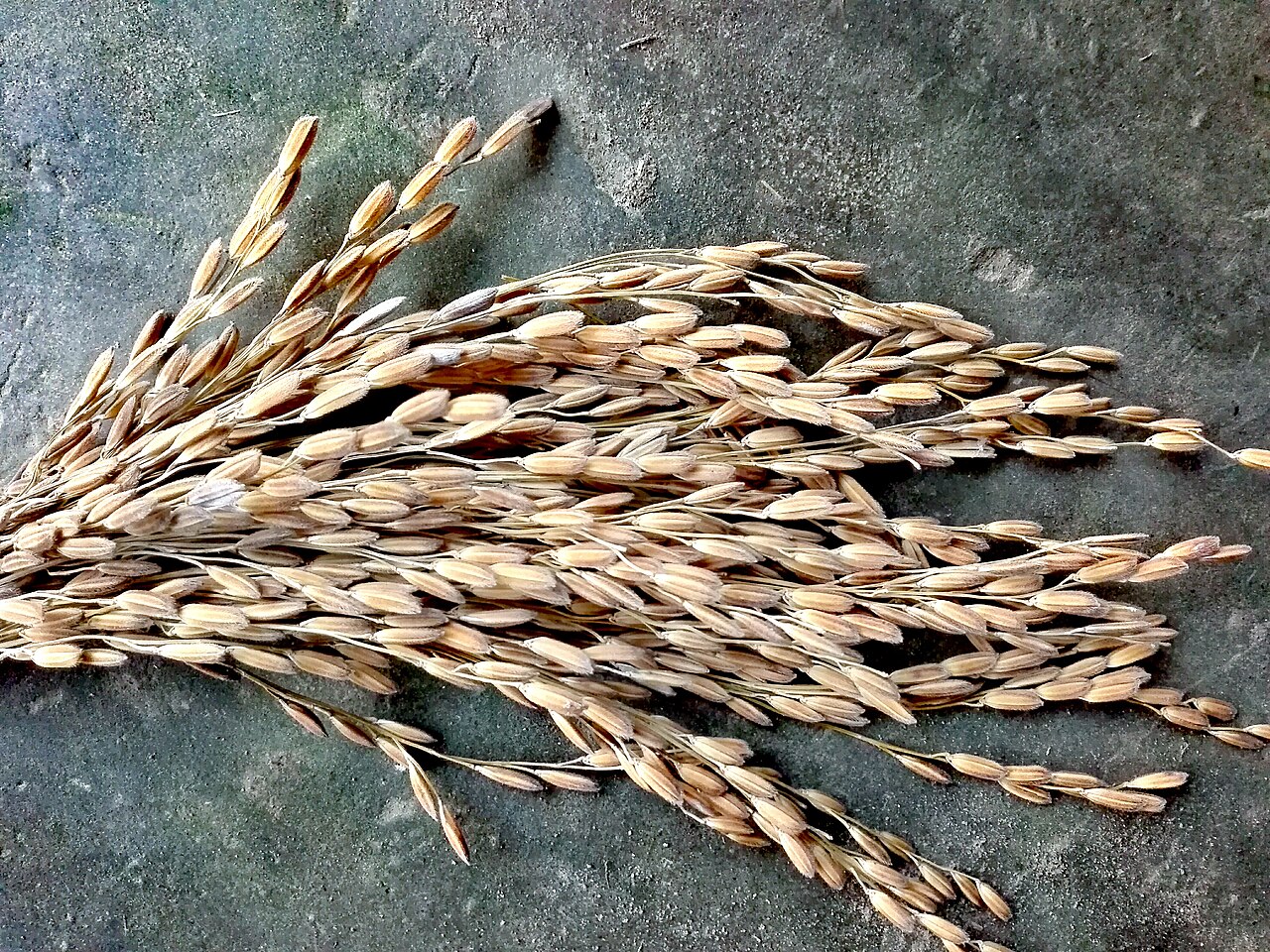
Joha rice is Assam’s own aromatic rice: a small-grained, fragrant winter (sali) rice from the Brahmaputra Valley that Assamese homes save for payokh, pulao and festival meals. It has been a registered Geographical Indication, “Joha Rice of Assam”, since 2017 [1][3]. Unlike basmati, it is prized for its scent and soft, fine grain rather than for long, stretching grains [4][5].
Quick facts
- What: a group of traditional aromatic rice landraces (Oryza sativa) grown in Assam, with names such as Kon Joha, Kola Joha, Keteki Joha and Bokul Joha [4][5].
- Season: sali, Assam’s winter rice, sown around June–July and harvested around November–December [4][7].
- Where: leading districts include Nagaon, Baksa, Goalpara, Sivasagar, Majuli, Chirang and Golaghat [1][2].
- How much: about 21,662 hectares and roughly 43,000 tonnes in 2024-25 [1][2].
- GI status: “Joha Rice of Assam”, GI application no. 439, filed in 2013 by Assam Agricultural University and Seuj Satirtha, registered in April 2017 [3].
- Best known for: payokh (Assamese rice kheer), pulao and festive dishes [4][9].
What is joha rice?
Joha is not one variety but a family of scented rices that Assamese farmers have grown for generations. A 2024 study in Scientific Reports by Assam Agricultural University scientists compared 20 popular joha cultivars and described them as short-grain aromatic rice, generally tall and late to mature [5].
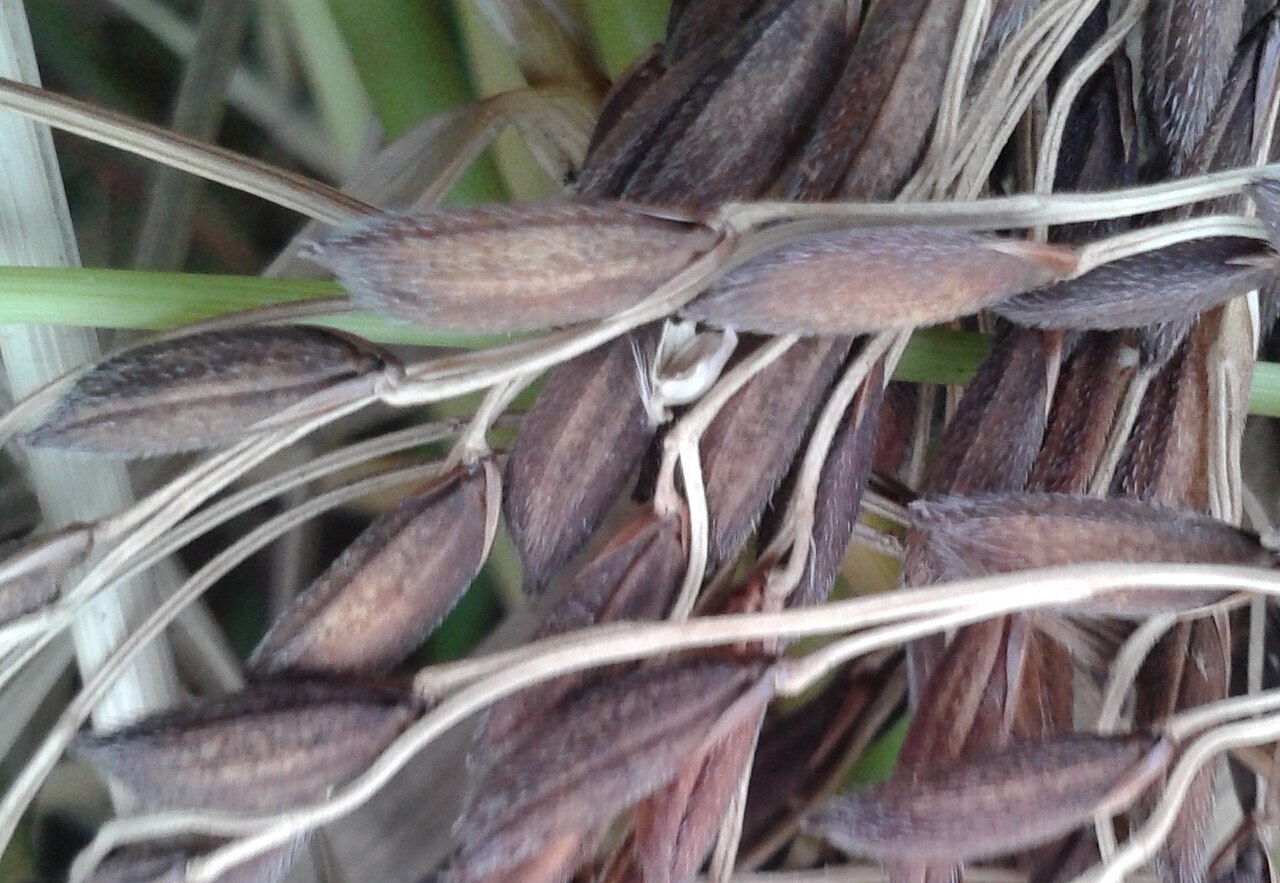
At home it is simply “joha saul” (joha rice), but the names multiply in the field: Kon Joha, Kola Joha (kola means black, after its dark husk), Kunkuni Joha, and AAU’s improved Keteki Joha (notified in 1999) and Bokul Joha [4][5].
Sources differ slightly on the grain: the 2024 study calls joha short-grain [5], while an IRRI and AAU handbook (2022) puts it between short and medium, depending on the variety [4].
Why does joha rice smell so good?
Joha’s scent is linked to its genes. The 2024 study traces it to a non-working copy of the BADH2 gene [5], and researchers have tied joha’s fragrance to the aroma compound 2-acetyl-1-pyrroline (2AP), the same compound studied in other scented rices [6][12].
A 2023 Dibrugarh University study of 15 Upper Assam joha landraces found 40 volatile compounds, 2AP among them [12]. The gene behind the fragrance also lowers yield, one reason joha stays a small, special crop [5].
Joha rice vs basmati: what is the difference?
The short answer: basmati is a long grain that stretches when cooked; joha is a small, fine grain valued for its sweet scent and soft bite.
India’s food regulator, FSSAI, set standards for basmati in 2023: milled grains must average at least 6.61 mm, and cooked grains must stretch to at least 1.7 times their raw length [8]. Joha is not judged on length. An IIT Guwahati review found joha comparable to other Indian scented rices in quality, except that its grains elongate less on cooking [6].
- Grain: basmati is long and slender; joha is short to medium [4][5][8].
- Aroma: both are scented rices; in joha, the aroma compound 2AP has been detected in lab studies [6][12].
- Use: basmati suits biryani, where separate long grains matter. Joha shines in payokh and small-grain pulao, where scent and softness matter more [4][9].
In Bengal, the closest cousin is Gobindobhog. When the Gobindobhog crop failed in 2024-25, much of Assam’s joha went to West Bengal to fill the gap, and joha prices in Assam roughly doubled, the Assam Tribune reported in March 2026 [1].
How is joha rice eaten in Assam?
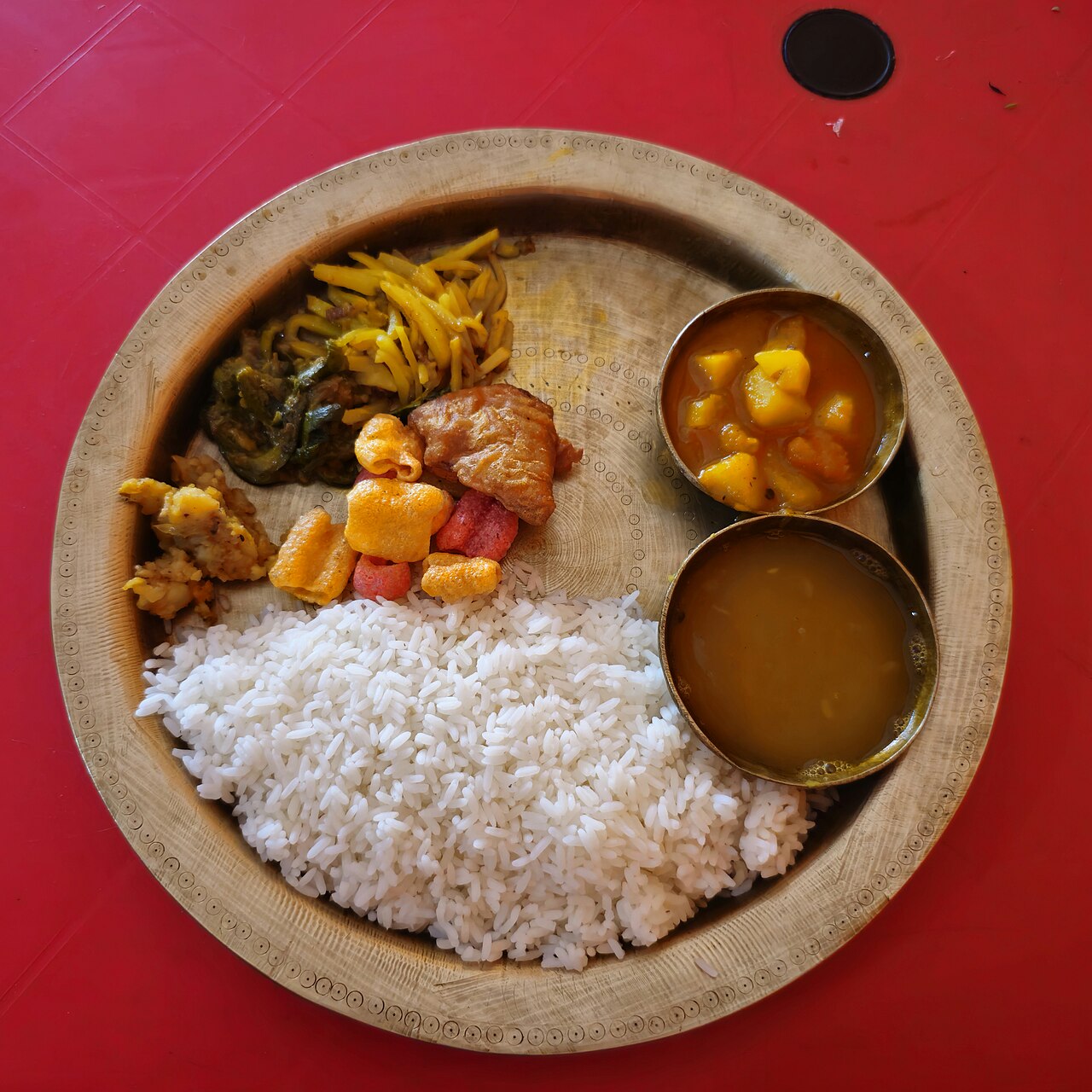
Joha is festival and guest rice in most Assamese homes: it goes into payokh, pulao and pitha, and is cooked plain when there is something special to celebrate.
Payokh (also spelt payas) is the dish most families tie to joha. It is a slow-cooked kheer of joha rice, milk and sugar or jaggery, made for Bihu and auspicious days, and often linked to the annaprashan, a baby’s first-rice ceremony [9]. The IRRI and AAU handbook also lists pulao and kheer as joha’s main uses [4].
Joha even appears in literature: in Madhav Kandali’s 14th-century Assamese Ramayana, heaps of food made from Khorika Joha are said to wake the sleeping Kumbhakarna [10].
How do you cook joha rice?
Cook joha gently, with a little less water than everyday rice, so the small grains stay whole and the aroma stays in the pot.
In our own kitchens we rinse joha lightly, soak it for 15–20 minutes and cook it covered on low heat, with a spoon of ghee for a festive plate.
Simple joha payokh (serves 3–4), adapted from a published recipe [9]:
- Wash about ½ cup joha rice and soak it for 30 minutes.
- Boil 1 litre of full-fat milk until it thickens a little.
- Add the drained rice and simmer, stirring often, until the grains are soft.
- Take it off the heat for a minute, then stir in about ¼ cup sugar or jaggery. Adding jaggery off the boil helps stop the milk from splitting.
- Finish with cardamom, roasted cashews and raisins. Serve warm or cold.
Where can you buy joha rice, and why has it become costly?
Joha is still mostly a home crop: supply outside Assam is small, and prices have risen sharply since 2025.
Farming families eat much of what they grow. Only about a tenth of what is left after household use reaches the mills, and most of that is sold outside Assam, especially in West Bengal [1].
Retail joha went from about ₹80 to about ₹160 a kg in roughly a year, according to the Assam Tribune (March 2026), driven by the Gobindobhog shortfall, diaspora demand and farmers holding stock [1]. Exports are growing too: a 25-tonne consignment of GI-tagged joha left for the UK and Italy in March 2026, after trial shipments of 1 tonne to Vietnam and 2 tonnes to Gulf countries [1][2]. An earlier 17-tonne lot had already gone to Europe in 2007 [4].
When buying, look for the variety name (Kon Joha, Keteki Joha and so on) and the harvest year. Sali rice is harvested around November–December, so fresh-crop joha follows that harvest [7].
Is joha rice healthier than other rice?
Not proven in people. Joha is still white rice; lab studies are interesting but early.
Researchers at IASST, Guwahati, reported in 2023 that joha lowered blood sugar in lab tests and in rats, but no human trial was reported [11]. Treat this as a lead for science, not health advice.
Love heritage rice? Read our guide to Chak-hao, Manipur’s black rice, or see what to eat on Majuli, one of joha’s growing districts.
Frequently asked questions
What is joha rice?
Joha rice is a family of traditional aromatic rices from Assam, grown in the winter (sali) season in the Brahmaputra Valley. Its small, fine grains have a sweet natural scent. It is GI-registered as “Joha Rice of Assam” since 2017 and is used for payokh, pulao and festive meals.
What is the difference between joha rice and basmati?
Basmati is a long grain that must stretch at least 1.7 times when cooked under FSSAI’s 2023 standards. Joha is a short-to-medium, fine grain that elongates less but has a strong sweet aroma and soft bite. Basmati suits biryani; joha suits payokh, small-grain pulao and plain festive rice.
Is joha rice good for diabetes?
There is no human evidence yet. A 2023 study by IASST, Guwahati, found that joha lowered blood sugar in lab tests and in rats, which is promising but early. Joha is still white rice, so people with diabetes should treat it like other rice and follow their doctor’s advice.
Why is joha rice so expensive?
Joha yields much less than ordinary rice because the gene behind its aroma also lowers yield. In 2024-25, a failed Gobindobhog crop in West Bengal pulled Assam’s joha into Bengal, and retail prices rose from about ₹80 to about ₹160 a kg within roughly a year, the Assam Tribune reported.
How do you cook joha rice?
Rinse joha gently so the fine grains don’t break, soak it for 15 to 30 minutes, and cook it covered on low heat with a little less water than everyday rice. For payokh, simmer soaked joha in thickened milk until soft, then stir in sugar or jaggery off the heat.
Taste it
A plate of hot rice in Assam is never complete without something tangy on the side. Our Taste of Assam box brings three customer favourites, Khorisa (bamboo shoot), Meetha Bogori and Jolphai, to go with your rice. We don’t sell joha rice yet; tell us if you’d like us to.
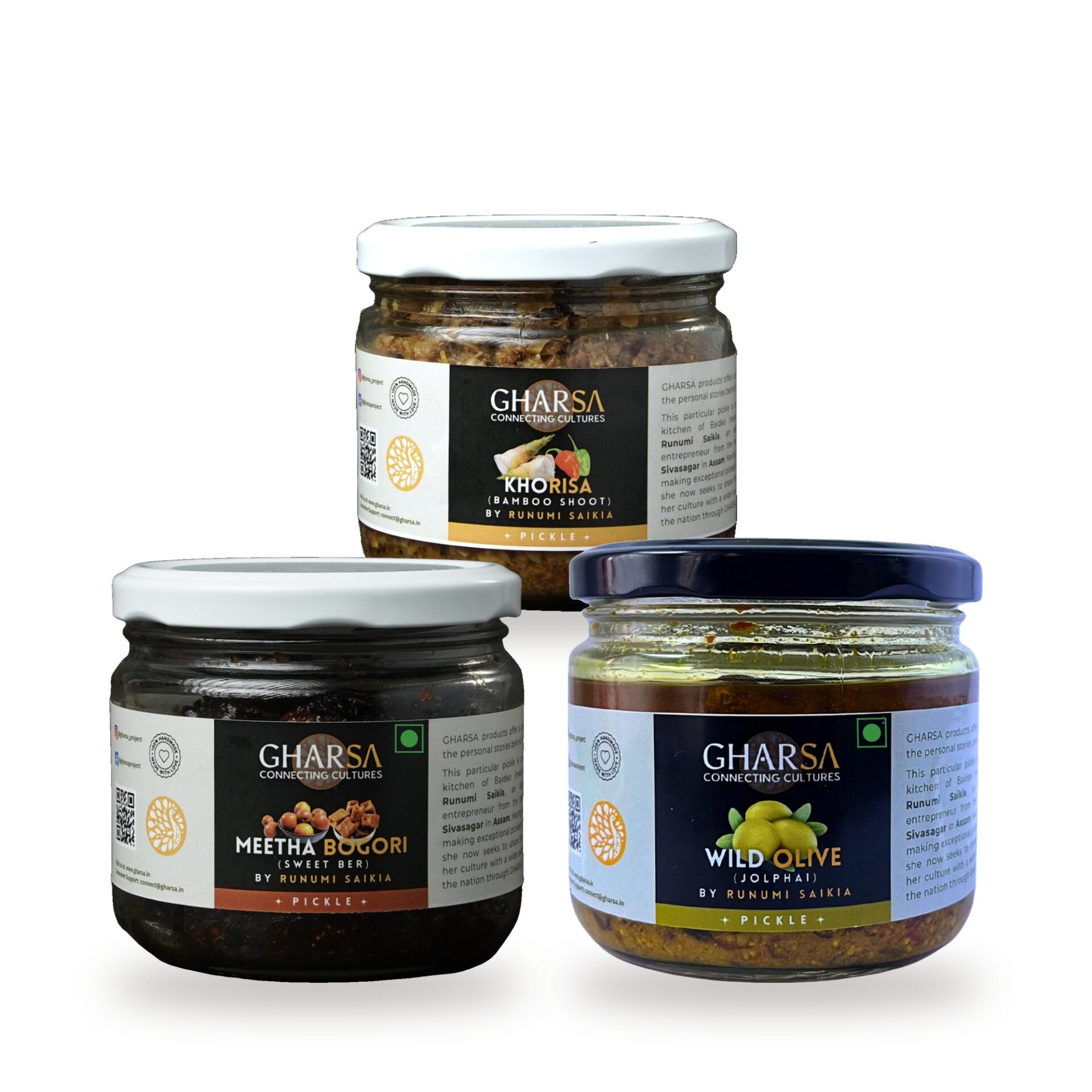
Taste of Assam box → | All gift boxes | Want us to stock joha rice? Join the list on WhatsApp
More from Assam’s kitchens: our guide to Assamese pickles.
Image credits
- Featured image: “Joha Bora Rice”, by অজয় দাস (Ajoy Das), CC BY-SA 4.0, Wikimedia Commons.
- “Joha rice” (Kola Joha), by Chiring chandan, CC BY-SA 4.0, Wikimedia Commons.
- “Assamese Thali 2”, by Ganesh Mohan T, CC BY-SA 4.0, Wikimedia Commons.
- Taste of Assam box photo: GHARSA.
Sources
- “Joha rice prices double from Rs 80 to 160 in Assam amid demand surge, supply crunch”, The Assam Tribune, 17 March 2026. assamtribune.com
- “Joha rice enters India’s elite club of origin-branded crops”, EastMojo, 14 March 2026. eastmojo.com
- “Joha Rice of Assam”, GI application no. 439, Geographical Indications Registry, IP India. search.ipindia.gov.in
- Premium Quality Rice of Assam, International Rice Research Institute and Assam Agricultural University (APART project), 2022. rkbassam.aau.ac.in
- Bordoloi D. et al., “Morpho-molecular and nutritional profiling for yield improvement and value addition of indigenous aromatic Joha rice of Assam”, Scientific Reports 14, 3509 (2024). nature.com
- Das A., Kesari V., Rangan L., “Aromatic Joha rice of Assam: a review”, Agricultural Reviews 31(1), 2010. indianjournals.com
- “Rice season”, Rice Knowledge Bank Assam, Assam Agricultural University. rkbassam.aau.ac.in
- “India launches Basmati rice standards”, FoodNavigator, 22 March 2023 (FSSAI basmati standards, effective 1 August 2023). foodnavigator.com
- “Payokh: Assam’s festive kheer”, Cuisine India Society. cuisineindiasociety.in
- “Joha rice: the 100-year-old Assamese rice with a rich history”, Slurrp, 2024. slurrp.com
- Ranjit Devraj, “Indian rice variety shows promise for people with diabetes”, SciDev.Net, July 2023. scidev.net
- Saikia P. et al., “Distribution of volatile compounds of traditional aromatic Joha rice (Oryza sativa L.) of upper Assam, India”, Thai Journal of Agricultural Science 56(2), 2023. tci-thaijo.org


[…] Joha saul (joha rice): small-grained and fragrant, used for payokh and pulao. We wrote a full guide to joha rice and how it differs from basmati. […]