Majuli food during Raas comes in two kinds. At the satras, where the festival is staged, you get simple vegetarian offerings such as mah-prasad: soaked gram, moong, ginger and fruit. In Mising homes and homestays nearby, it means fish steamed in leaves, smoked meat, rice cooked in banana leaf and home-brewed apong. In 2026, Raas Purnima, the full moon the festival is built around, falls on Tuesday 24 November [1][2].
Quick facts
- Where: Majuli, the river island district in the Brahmaputra, Upper Assam. It covers about 352 sq km and is reached by a ferry ride of about an hour [7][9].
- What: Raas Mahotsav (also written Raax or Rass), a festival that acts out the life of Lord Krishna through dance, drama and music [3][4].
- When: Around the full moon of Kati–Aghun (October–November). In 2026 the full moon falls on 24 November [1][2][4].
- Scale: More than 60 venues in 2022 [4]; 12 satras and over 50 open-air stages in 2025 [6]. A 2024 report counted 65 satras preparing [14], while PARI counted about 22 satras still working on the island in 2023, after erosion displaced many [4].
- Food to look for: mah-prasad at the naamghar, and Mising dishes such as ghetiya, purang apin, pamnam, mamsing and apong in village homes [7][9][12].
What is the Raas Mahotsav of Majuli?
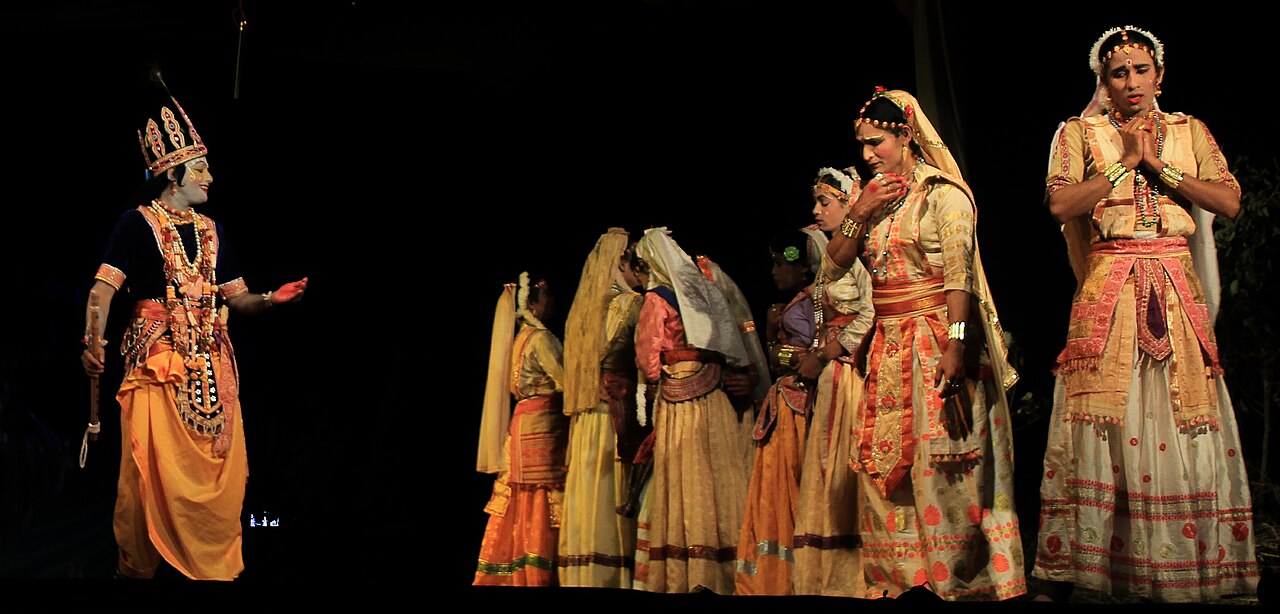
Raas Mahotsav is Majuli’s biggest cultural season: for a few nights around the November full moon, satras and villages across the island stage Krishna’s life as theatre. Assam Tourism traces the tradition to Dakhinpat Satra more than 300 years ago, where it began as a puja; acting and stagecraft came later [3].
A single performance can have more than 100 characters on stage [4]. Garamur Satra’s tickets sell out about a month ahead [3], and non-satra groups now stage their own Raas too. At Borun Chitadar Chuk village, members of the Mising community organise one in the local school [4].
When is Majuli Raas Mahotsav 2026?
The full moon falls on 24 November 2026, so the main Raas nights in Majuli should fall around then. Check the exact schedule with your satra or homestay, because each organiser sets its own dates.
Sources disagree on two details, so plan with some slack:
- Month: PARI and the Majuli district administration say Kati–Aghun [4][5]; Assam Tourism’s page says Aghun [3].
- Length: PARI describes about three days around the full moon [4], and a festival listing site says three nights; the district site says four to five days [5].
What do people eat at the satras during Raas?
At the satras, food stays simple and vegetarian. Actors who play Krishna, Narayana or Vishnu eat only sattvik food, and they fast on the first day of the festival [4].
The offering you are most likely to receive at a naamghar (prayer hall) is mah-prasad. Mah means pulses. It is soaked chana (but) and green moong, often with sprouted pulses, ginger, coconut pieces and whatever fruit is in season, served on a piece of banana leaf [12][13]. Majuli has its own offerings too: at Paal Naam in Auniati Satra, held over the last five days of Kati, devotees are given salt [5].
In our Assamese homes, the taste of soaked gram with a sliver of raw ginger means one thing: someone has just come back from the naamghar. If you are handed prasad at a Raas venue, take it with your right hand and eat it there. It is a blessing, not a snack.
What Majuli food do Mising kitchens serve?
Mising food is the everyday cooking of the Mising (Mishing) people, a riverine community with deep roots in Majuli. It is built on rice and fish, steamed, boiled or smoked rather than cooked in heavy masala [7][10]. “We don’t eat a lot of masala,” Nayanmoni Risong, who cooks at Risong’s Kitchen in Garamur, told PARI [7].
Cooking happens on the marom, a clay hearth set on bamboo, with fish and firewood drying on the parap rack above it [7].
Dishes you may find on a Mising thali in Majuli:
- Ghetiya: a sweet-and-sour curry of fish and potato [7].
- Purang apin / porag aapin: rice steamed in a leaf parcel. PARI describes banana leaves [7], while an IANS report describes tora pat leaves [9].
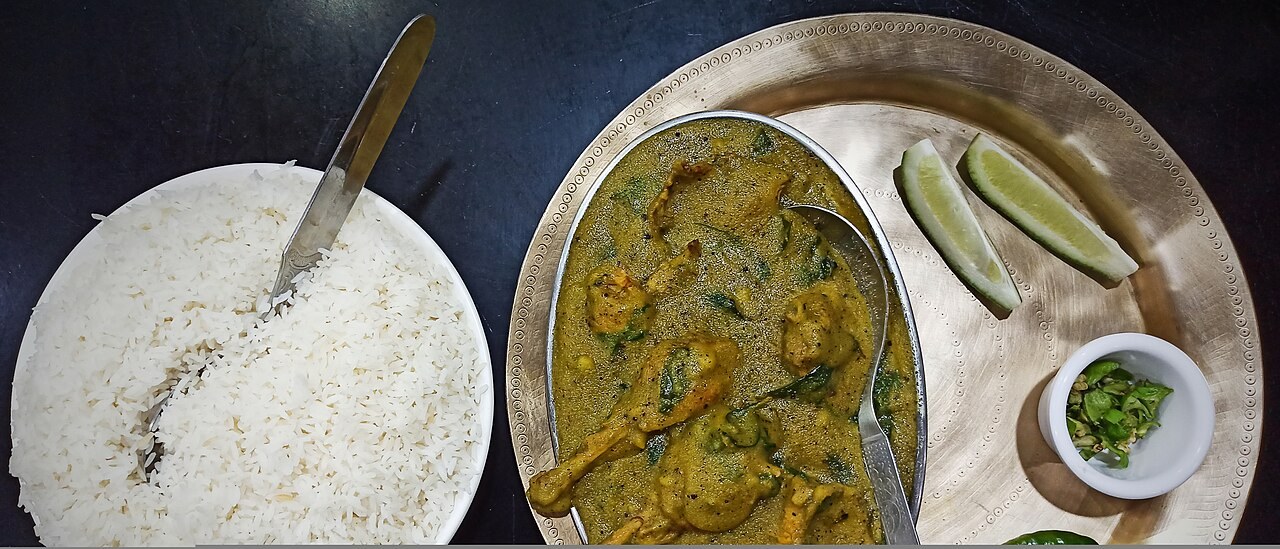
- Pamnam: fish or chicken baked in banana leaf [9].
- Mamsing: a dry-fish chutney [9].
- Kukura khorika: smoked chicken on skewers [7].
- Steamed eel, usually cooked in raw bamboo [7], and fish, chicken or pork cooked in bamboo tubes [9].
- Chicken with rice powder: a Mising-style chicken thickened with powdered rice, which chef Atul Lahkar says he once cooked for nearly 1,000 people at a Mising event in Majuli [10].
Bamboo cooking runs through the whole Northeast; see our guide to khorisa, Assam’s fermented bamboo shoot.
What is apong, the Mising rice beer?
Apong is the Mising community’s home-brewed rice beer, made mostly by women from rice and a starter of dried, powdered herbs and leaves [8]. There are two main styles. Nogin (or nongzin) apong uses rice alone. Poro apong has ash from burnt paddy stalks mixed in [8]. An IANS report calls poro the sweet one that visitors like best and nogin the sour one [9].
The Mising treat apong as essential at pujas and festivals, and demand peaks around the Bihus and the Mising spring festival Ali-Aye-Ligang [8]. At the Mising-run Raas in Borun Chitadar Chuk, roasted pork and apong are favourites [4]. Satra grounds are places of worship, so keep apong and meat for village and homestay tables.
Which Majuli rice should you look out for?
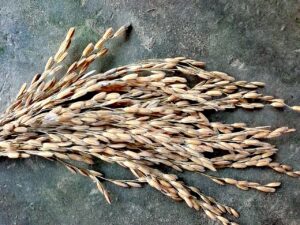
Look for komol saul, a soft rice eaten after soaking without cooking, and bao dhan, a deep-water rice that keeps growing when the fields flood [11]. A 2025 Morung Express report on Majuli’s rice describes both, along with bora saul [11]. In our homes, komol saul soaked and eaten with curd and jaggery is a favourite jolpan (light meal or snack).
FAQs
What food is Majuli famous for?
Majuli is best known for Mising home cooking: fish and potato ghetiya, rice steamed in leaf parcels (purang apin), fish baked in banana leaf (pamnam), dry-fish chutney (mamsing), smoked chicken, bamboo-cooked meat and apong rice beer. It is also known for komol saul, a rice eaten after soaking, without cooking.
When is Majuli Raas Mahotsav 2026?
Raas is built around the Kartik full moon, which falls on Tuesday 24 November 2026. Majuli’s satras usually stage performances over about three to five nights around it, and each organiser sets its own dates. Confirm the exact schedule with your satra or homestay before you book ferries and rooms.
Is the food at Majuli Raas vegetarian?
At the satras, yes. Actors who play Krishna, Narayana or Vishnu eat only sattvik food and fast on the first day, and naamghars offer vegetarian prasad. Away from the satras, Mising villages and homestays serve fish, pork, chicken and apong, so non-vegetarian food is easy to find.
What is mah-prasad?
Mah-prasad is the simple offering handed out at Assamese naamghars and satras. Mah means pulses: soaked chana and green moong, often sprouted, served with slivers of ginger, coconut pieces and seasonal fruit on a piece of banana leaf. It is given out at religious gatherings, especially in Bhado, the month of devotional singing.
What is apong made of?
Apong is the Mising community’s rice beer, made at home mostly by women. Rice is fermented with a starter made from dried, powdered herbs and leaves. Nogin apong uses rice alone, while poro apong also has ash from burnt paddy stalks mixed in. Every household’s recipe is a little different, and it is central to Mising festivals.
Taste it
Can’t get to Majuli this Raas? Bring a little Upper Assam to your table. Our Taste of Assam box has three customer favourites: Khorisa (bamboo shoot), Meetha Bogori (sweet jujube) and Jolphai (Indian olive). Try them with plain hot rice. Want to try Majuli rice or Mising ingredients? Tell us on WhatsApp, and if enough of you ask, we will try to source them.
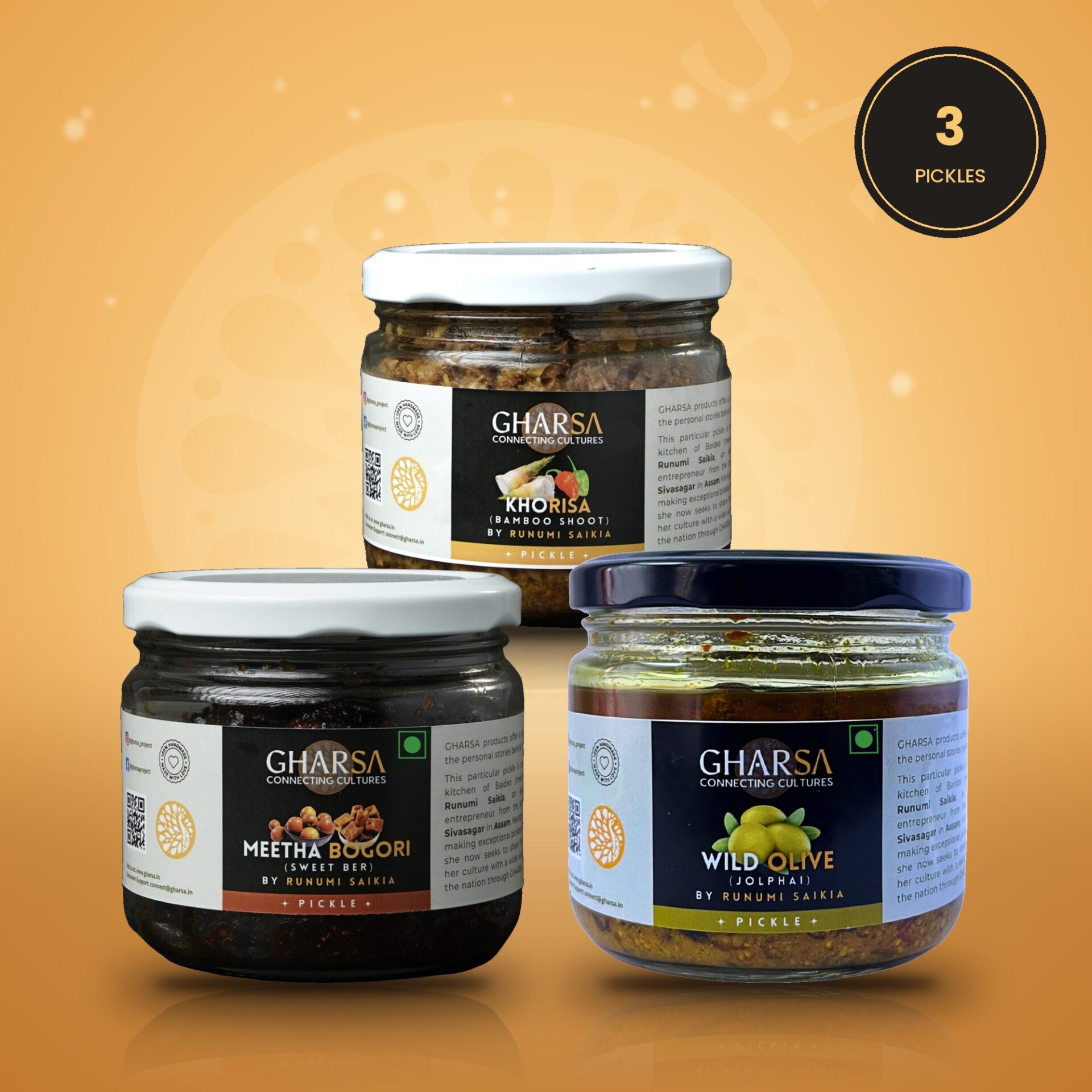
Taste of Assam box → | All gift boxes | Want us to stock Majuli rice? Join the list on WhatsApp
Following the Northeast’s festival season? Read about Tokhu Emong festival food in Nagaland and Wangala festival food in the Garo Hills.
Image credits
- Featured image: Raas leela of Majuli, by Indranil Gayan, CC BY-SA 4.0, Wikimedia Commons.
- The main gate of the Garmur Satra in Majuli, by BhuyanBhaskar, CC0, Wikimedia Commons.
- Pitang Oying served with rice, by Swapnil A Bharadwaj, CC BY-SA 4.0, cropped, Wikimedia Commons.
- Taste of Assam box: GHARSA.
Sources
- “Raas Purnima 2026 in Assam: Date, Majuli Raas Mahotsav, Story and Celebrations”, Hindu Tone, 2026. hindutone.com
- “Kartik Purnima 2026: Date, Muhurat, Significance, Puja Vidhi”, SmartPuja, 2026. smartpuja.com
- “Raas Purnima and the Raas Mahotsav of Majuli”, Assam Tourism, Government of Assam. assamtourism.gov.in
- Prakash Bhuyan, “Raas Mahotsav and the satras of Majuli”, People’s Archive of Rural India (PARI), 19 May 2023. ruralindiaonline.org
- “Festival Celebrations”, Majuli District Administration, Government of Assam. majuli.assam.gov.in
- “Majuli prepares for Raas Mahotsav, first-ever Deori-language Raaslila takes center stage”, The Assam Tribune, 29 October 2025. assamtribune.com
- Vishaka George, “A Mising feast at Risong’s Kitchen”, People’s Archive of Rural India (PARI). ruralindiaonline.org
- Priti David, “Making the Mising brew in Majuli”, People’s Archive of Rural India (PARI). ruralindiaonline.org
- IANS, “Dine in style on Majuli, world’s largest river island”, Business Standard, 29 March 2017. business-standard.com
- Atul Lahkar, “Pithagurir Lagat Kukura Mangkha”, Scroll.in, 28 November 2019. scroll.in
- Anupa Roy, “Brahmaputra Rising: The vanishing island of Majuli and its unique rice habitat”, The Morung Express, 25 August 2025. morungexpress.com
- “Assamese Mah-prasad” (in Assamese), ETV Bharat Assam, 28 August 2023. etvbharat.com
- Ankita Sharma, “Durga Puja in Assam: The Seven Festive Foods Everyone Is Talking About”, DY365, 17 October 2026. dy365live.com
- “Over 65 satras in Assam’s Majuli gear up for annual Raas Mahotsav”, Northeast News, 9 November 2024. nenews.in