Bhoot jolokia (bhut jolokia) is the ghost pepper of Northeast India, a chilli grown mainly in Assam, Nagaland, Manipur and Mizoram. In 2007 Guinness World Records named it the world’s hottest chilli, at about one million Scoville heat units. In Assamese homes it goes into pickles, chutneys and pork or fish dishes, and a little goes a very long way.
Outside the Northeast, people know bhoot jolokia as a dare: the chilli in viral eating challenges. At home in Assam it is something quieter. It is a smoky, fruity heat that sits on the side of the plate, eaten a pinch at a time with rice and dal. This guide covers both sides: how hot it really is, where its name comes from, how it once got mixed up with elephants and grenades, and how to eat a bhoot jolokia pickle without regretting it.
What is bhoot jolokia?
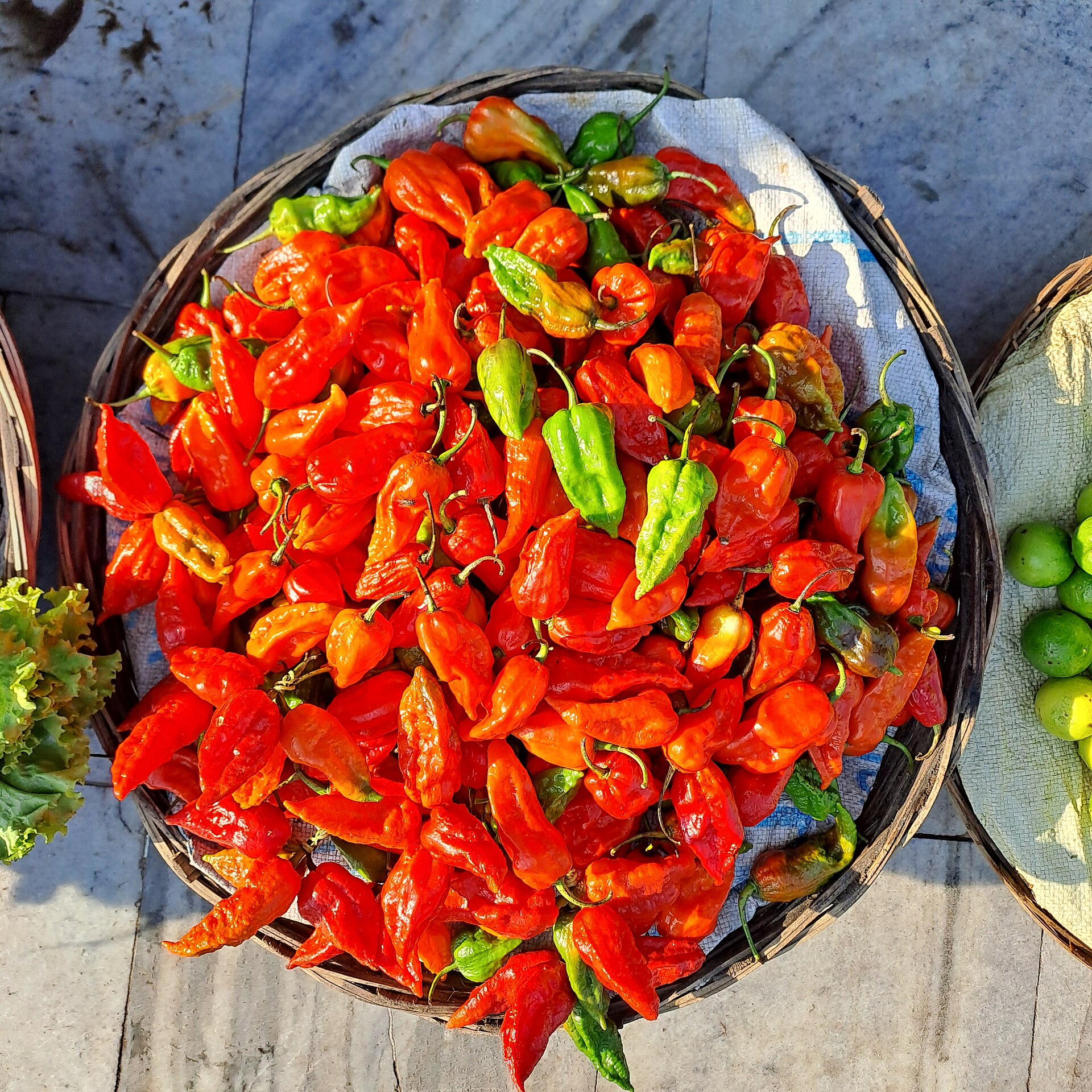
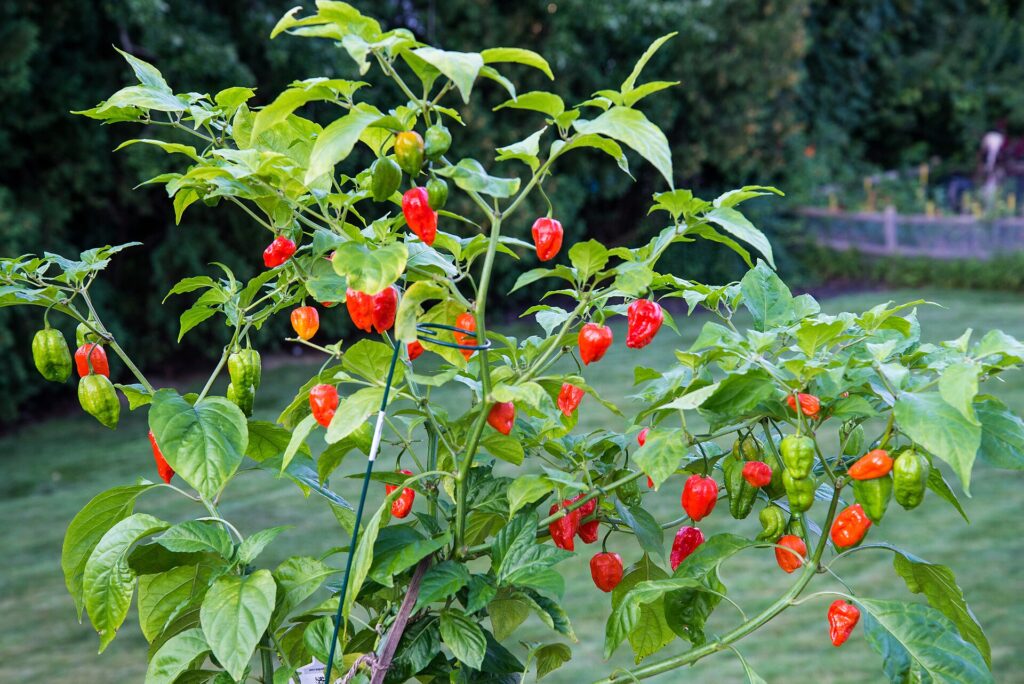
Bhoot jolokia is a variety of Capsicum chinense. The plant is a semi-perennial shrub that usually grows to between about half a metre and 1.3 metres. Its pods are long and wrinkled, roughly 5–7 cm, and ripen to red, orange or a dark chocolate colour [1][2].
It has many local names. In Assam it is bhut jolokia or bih jolokia (“poison chilli”). In Nagaland it is often called raja mircha (king chilli), and in Manipur umorok [1]. Some writers spell it bhoot jholokia, as we do on our jars. They are all the same family of chilli.
Where the name comes from is less settled. One widely repeated explanation is that “bhut” refers to Bhutan, and that it was later read as bhoot, the word for ghost, which gave us “ghost pepper” in English [1]. A Government of India agriculture portal instead links “bhut” to the chilli’s large pod size [2]. We like the ghost version, but neither is proven.
How hot is bhoot jolokia?
Chilli heat is measured in Scoville heat units (SHU). For scale, Tabasco sauce sits at about 2,500–5,000 SHU [1].
- 2000: India’s Defence Research Laboratory reported about 855,000 SHU [1].
- 2007: Researchers at New Mexico State University’s Chile Pepper Institute grew the chilli from seed collected in Assam in 2001. Their repeated tests came out at about one million SHU, nearly double the previous record holder, the Red Savina habanero. Guinness World Records then listed bhoot jolokia as the hottest chilli in the world [3][1].
- 2011 onwards: it lost the title, first to the Trinidad Scorpion “Butch T” and later to the Carolina Reaper and Pepper X [1][4].
Not every bhoot jolokia is that hot. A Down To Earth report found that some crops in Assam now test far lower, around 0.3 million SHU. A Dibrugarh nursery owner it quoted blames cross-pollination as farming spread [4]. Heat also changes with soil, weather and how ripe the pod is when it is picked. So treat “one million” as the top of the range, not a promise.
Where it grows, and when
The chilli likes the hot, humid climate of the Northeast. In the hill states it is usually planted around February–March and picked from May–June. On the plains it can also be planted in September–October [2]. Pods are picked by hand when they turn bright red or orange, over several rounds [2].
For Assam’s farmers it can be a valuable crop, but prices swing. Down To Earth reported wholesale prices at Guwahati’s Machkhowa market of about ₹150–300 a kg in season (March–July), and much more off-season [4]. That is why so much of the harvest is sun-dried, powdered or pickled to last the year. According to the same report, about 90% of production goes into food [4].
The chilli, the elephants and the grenade
Bhoot jolokia’s heat has been put to some unusual uses.
Elephants. In parts of the Northeast, villagers have smeared chilli paste on fences or burnt chillies to make smoke, hoping to keep wild elephants away from crops [1]. The evidence is mixed. A study in Assam from 2006 to 2009 found that chilli smoke did not lower the chance of crops being raided, while some trials in Africa saw short-term success [5]. Today the idea has turned into something gentler. Aaranyak, a conservation group, has trained villagers in Sadiya (Tinsukia district) to grow bhoot jolokia as an alternative crop. The aim is to reduce human–elephant conflict and support families whose crops and homes have been damaged by elephants [6].
Defence. In 2009, scientists at India’s DRDO announced work on chilli-based sprays and “chilli grenades” for non-lethal crowd control [1][4].
How Northeast homes eat it
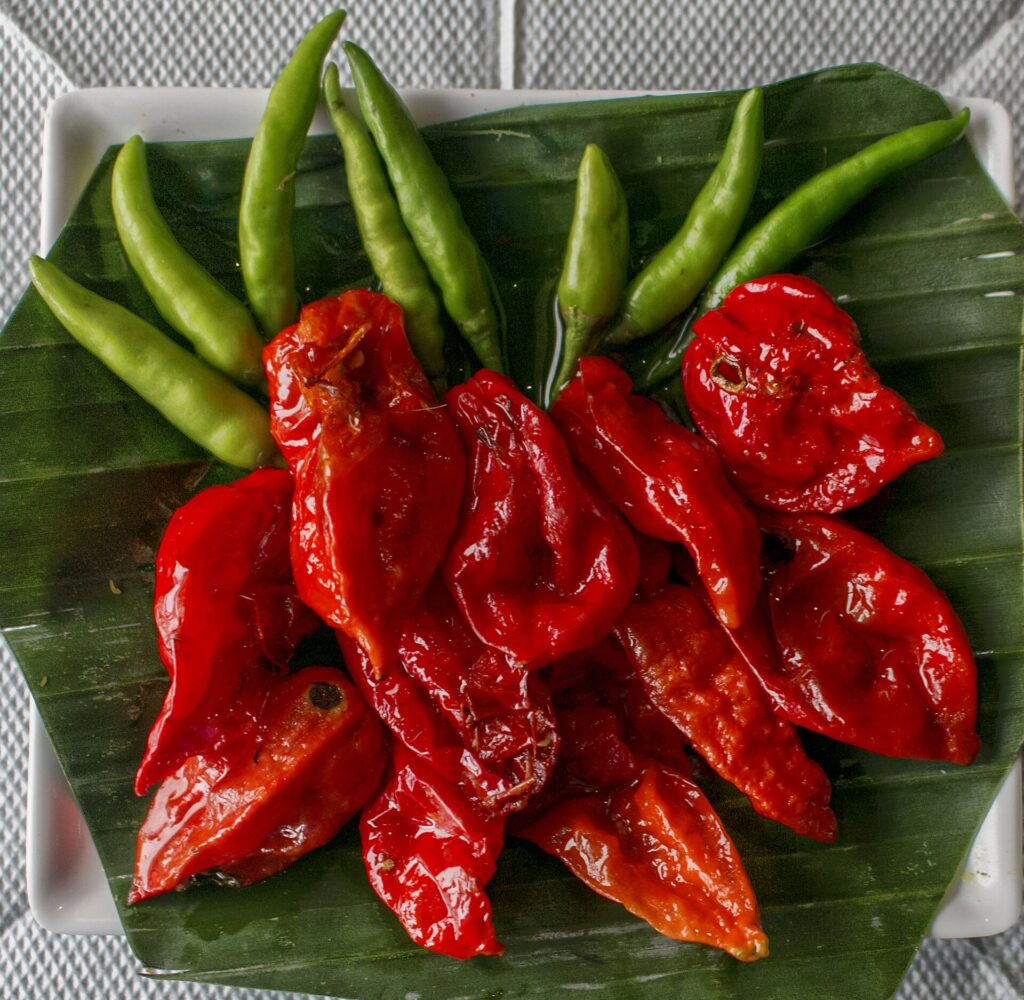
In Northeast kitchens, bhoot jolokia is a seasoning, not a vegetable. It is used fresh or dried in curries, chutneys and pickles, and it is a classic partner for pork and for dried or fermented fish [1][2]. In many Assamese homes, one pod is simply burnt over the flame, crushed with salt and mustard oil, and mixed into a pitika (mash) of potato or brinjal. One chilli can flavour a meal for the whole family.
What people from outside often miss is the flavour under the heat. A good bhoot jolokia is fruity and slightly smoky, which is why a pickle works so well. Mustard oil and spices carry that flavour and soften the first hit.
How to eat a bhoot jolokia pickle
- Start small. Less than half a teaspoon is a serving. Think of it as a condiment.
- Mix, don’t bite. Stir it into hot rice with dal, khichdi, noodles, eggs or a plain paratha.
- Pair it with fat or starch. Rice, ghee, curd or potatoes spread the heat.
- Use a dry spoon. Moisture is what spoils pickles, so keep the lid tight.
- Handle the fresh chilli with care. If you cook with fresh pods, wear gloves and keep your hands away from your eyes.
If you love the flavour but not the fire, try a milder blend. Our Mild Bhoot Jholokia Mustard Paste keeps the smoky taste and brings the heat down a long way.
Looking for a gift for someone who loves spicy food? See our guide to unique Diwali food gifts from Assam.
Bhoot jolokia: frequently asked questions
How hot is bhoot jolokia?
Laboratory tests have measured it at about 855,000 to just over one million Scoville heat units, which is hundreds of times hotter than Tabasco sauce. Some farm crops today test lower, so heat varies from pod to pod.
Is bhoot jolokia still the hottest chilli in the world?
No. It held the Guinness record from 2007 and lost it in 2011. The Carolina Reaper and, more recently, Pepper X have since been certified hotter. It is still among the hottest chillies grown in India.
Are bhut jolokia, ghost pepper, naga chilli and raja mircha the same?
Broadly, yes. They are local and trade names for closely related Capsicum chinense chillies from Northeast India. “Naga Mircha” from Nagaland also has its own Geographical Indication, which applies only to chillies grown there.
Is ghost pepper pickle safe to eat?
For most adults, a small amount is fine. Skip it if you don’t eat spicy food or your stomach is sensitive, and keep it away from children. If in doubt, start with the mild version.
Original or mild bhoot jolokia pickle: which should I buy?
Choose the Original if you already enjoy very hot food. Choose the Mild Mustard Paste if you want the smoky flavour without the burn, or if you are buying for a family.
🌶️ Taste it

Our Original Bhoot Jholokia Pickle is made in Assam with bhoot jolokia, mustard oil and whole spices. For gentler heat, try the Mild Bhoot Jholokia Mustard Paste.
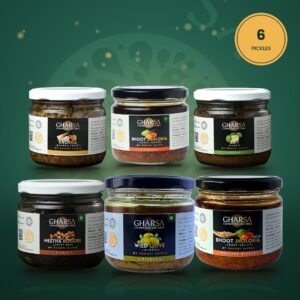
Can’t decide? The Spice Lovers Box has both, plus our Aam pickle. Or start with the Pickle Trial Pack: six 40 g jars, including both bhoot jolokia pickles.
Would you buy dried bhoot jolokia or chilli flakes from us? Tell us on WhatsApp.
Image credits
- Featured image: Bhut jolokia at Ganeshguri, Guwahati. Photo: Chiring chandan, CC BY-SA 4.0, via Wikimedia Commons
- Bhut jolokia plant. Photo: Chella p, CC BY-SA 4.0, via Wikimedia Commons
- Bhoot jolokia pods on a banana leaf. Photo: Vikramjit Kakati, CC BY-SA 4.0, via Wikimedia Commons
- Pickle jar: GHARSA
Sources
- “Ghost pepper”, Wikipedia (used as a pointer to its cited sources, including Mathur et al. 2000 in Current Science, Guinness World Records and BBC News) – en.wikipedia.org/wiki/Ghost_pepper
- “Bhut Jolokia”, Vikaspedia – Technologies for NE India, Government of India – vikaspedia.in
- “Chile Pepper Institute Identifies World’s Hottest Chile Pepper”, ScienceDaily / New Mexico State University, October 2007 – sciencedaily.com
- “How ‘Bhut Jolokia’ lost its heat”, Down To Earth – downtoearth.org.in
- “Use chili to deter crop damage by mammals”, Conservation Evidence, University of Cambridge (incl. Davies et al. 2011, Assam) – conservationevidence.com
- “Training provided on Bhut Jolokia and Kaji Nemu plantations to help coexistence with elephants”, Aaranyak – aaranyak.org
- “Naga Mircha”, Wikipedia, and Rajan, Sharma & Mishra, “Geographical Indication for Horticulture Commodities in Northeastern India”, Indian Horticulture (ICAR), 2023 – en.wikipedia.org/wiki/Naga_Mircha · epubs.icar.org.in